Ch8 Pt3 Escape from Berlin to Haifa

As far as the Rüdigers were concerned, they looked with concern at the future of the little girl in their charge in an increasingly military, racist and anti-Semitic Germany. Irena was also aware of the changes going on about her. Jews were forbidden by notice to sit on public benches, so-called “Aryan” Germans were forbidden to patronise Jewish businesses under threat of severe penalties, and there were always secret police on the lookout for offenders. Julius Streicher’s Der Stűrmer churned out the vilest and crudest of newspaper libels against the Jews. Thanks to unceasing insults and propaganda Hitler’s mania seemed to have communicated itself to the entire nation.

One day Irena came across two boys who were tormenting an old orthodox Jew by pulling his beard. She picked up some stones, threw them at the boys and bluffed them into moving on. It may have been at this time that she finally decided to quit Germany for good and go to Palestine. She always said that she smelt something dangerous and unhealthy in the air. She might have been fourteen or fifteen years old when she made this decision.

During the years following the end of the First World War, the interest in Palestine of European Jewry had been greatly stimulated. This revival of interest was due mainly to three factors. In the first place, the vast upheaval of peoples occasioned by the war had brought Western European Jews face to face with their eastern co-religionists who were in closer contact with the Holy Land. Secondly, European Jews began to have forebodings of new pogroms, especially in Germany as Hitler rose to power. The walls of the ghetto were down, but the new freedom did not necessarily spell security for the Jew. Finally, there was the Balfour Declaration, by which Great Britain gave her support to the establishment in Palestine of a national home for the Jews. There had been small Jewish settlements in Palestine since biblical days, but it was at the end of the nineteenth century, during the lifetime of Theodor Herzl, the founder of modern Zionism, that serious if sometimes unsuccessful attempts were made by communities of Jews to return to Palestine and settle there. At the conclusion of the First World War, the Balfour Declaration coupled with the lifting of the Turkish yoke now gave a basis for the realisation of Herzl’s ideas.

In the Germany of the nineteen twenties, as anti-Jewish feeling increased, a movement known as the Jugend Aliyah came into existence through which Jewish children were to be trained for settlement in Palestine. “Jugend” was the German word for “Youth” and “Aliyah” was the Hebrew word for “migration”. Members of the “Youth Migration” movements were sent for varying periods to farm schools in their native countries. They lived in “kibbutzim” or settlements in conditions that tried to simulate those they would find in Palestine. Here they were taught the elements of Hebrew, a dead language which was being revived and which is today the living, universal language of the people of the State of Israel. These Jewish children were carefully watched during their stay at farm schools, for immigration certificates to Palestine granted by the British authorities were limited. Therefore only the best could qualify for them and the Hebrew title of “Halutzim”, or “Pioneers”. The emphasis was on manual work and all-Hebrew speech. By manual work the Jews would redeem themselves and the soil of Palestine. By the use of Hebrew and the renunciation of bastard Yiddish and Ladino they would be truly recreating the spirit of the biblical ancients.

It was to one of these schools that Irena now went, taking tearful leave of Uncle Heinrich and Auntie Netti, and of Oma and Opa Rüdiger, who had been almost like real parents to her. Her mother put no obstacle in her way and appears at times to have been almost indifferent as to where this new step might be leading her daughter. Despite this, her final acquiescence, which still seems to be shrouded in a certain mystery, was to save her daughter’s life. 

In the autumn of 1938 Irena, 15 years old, obsessed by the idea of going to Palestine, and studying Hebrew earnestly, learnt that she was to board a train carrying Jewish children out of Germany. She had made her own arrangements to obtain a passport stamped “Palästinawanderer” after wrangling her mother’s consent. Although differences of opinion were opening between them, the mother did not want her young daughter to leave Germany. Irena had been in hospital with a lung infection and told her mother that she was signing a release form. The mother, her mind occupied as usual by business matters, signed without thinking. Irena also tried to persuade her brother Heini to emigrate with her, but he declined and thereby tragically and unwittingly signed his death warrant. The great Berlin railway station was crowded with parents saying tearful goodbyes to children carrying lunch baskets and spare clothes. But Irena’s mother was not there to see her off. It was a disappointment etched into Irena’s mind. Thus she quit the land of her birth. 

She was only just in time.       

Suddenly the embers of racial and religious prejudice and violence, fanned so assiduously by the Nazis, burst into flame. Anti-Jewish demonstrations broke out everywhere, and the exodus of Jewish children to Palestine was stopped. By lying propaganda, by offering the traditional Jewish scapegoat as the cause of all Germany’s misfortunes, and by appealing to the basest of human instincts Hitler was propelled to the pinnacle of his power. The long-suffering Jews took the first steps on a seemingly unending path of tears to European concentration camps. And the civilised nations who did not want to know about the butchery beginning in the Third Reich found themselves hurtling towards the most destructive war in the history of mankind.

At a later date gentle Uncle Heinrich and Auntie Netti were to find death in one of those concentration camps so aptly called by the Nazis “Vernichtungslager” – “Vernichtung” meaning quite literally “reduction to nothingness. 

After Irena had left Germany the Nazis one night smashed their way into the house where her brother lived and sent him to a concentration camp. Heini, a sixteen years old boy, must have wondered why he was so ill treated, for he had broken no law and harmed nobody. His mother, awake at last to the danger, fled to England, where she frantically canvassed a number of her relatives who had settled there to raise enough money to ransom her son. But she was unsuccessful. And then, with a finality which put paid to all her efforts, Germany invaded Poland. Within twenty four hours England had declared war on Germany and all avenues of communication were cut.

Heini Schreiber disappeared from the face of the earth. He became one of the six million victims of the Holocaust and one of the forty million dead from all sides in World War Two.

Irena had escaped to Palestine on one of the last refugee trains to leave Germany. She travelled by way of Italy, where she took ship across the Mediterranean. The crew was Italian and there were many adult passengers aboard. But the youthful refugees formed a large proportion of the travellers.

Although they were little more than children the young emigrants were unnaturally subdued. Only a few weeks before, they had been looked after by parents and relatives. Now, very suddenly, they had to look after themselves and, perhaps, after each other. Without being able to put their feelings into words they knew that they would be without family for a very long time. They knew also that their parents and loved ones in Germany were in great peril. As if this was not enough they were going to a strange country of which they knew nothing. And all the time they were trying to cope with a new and difficult language. This was Hebrew, whose Semitic words, grammar and writing had nothing in common with their native German. 

After ploughing through the blue and mostly calm Mediterranean the ship berthed at Haifa. Irena felt little joy and some trepidation when she first set eyes on the continental-style cafés along busy Kingsway, the picturesque but run-down Arab quarter, and the white, flat-roofed houses climbing up Mount Carmel. In any event, her stay in Haifa was brief. Almost immediately she was whisked away to the long-established kibbutz of Ashtoth Yakov, some miles out of the city. Here the only language spoken was Hebrew. Even though it was understood German was met with a stony stare, so the newcomers had no option but to learn the language. Older kibbutzniks were intermixed with them to teach them agriculture and accustom their ears to the new tongue. 

The trickle of mail from Germany stopped with the advent of the war. The new arrivals felt like total orphans. This was what most of them were shortly to become.

Ch8 Pt2 Irena growing up.

With the death of Irena’s father, her mother had to support two children. She thus became a commercial traveller, and with her handsome appearance, persuasive manner, and multi-lingual gifts, began to make a satisfactory if somewhat hazardous living. Neither was she always too worried about the quality of the merchandise. Personal survival was the object, and it was legitimate to subordinate everything else to that end if necessity so dictated.

Irena always remembered one occasion when she was with her mother in a small village somewhere in Germany – a “Dorf.” Her mother had been selling fur coats at very reasonable prices against the bitter cold of the coming continental winter, and she had made a killing and got rid of all her stock. They went back to their hotel, Irena hoping for a day of relaxation in the country. But the sky began to cloud over, and a thin drizzle of rain started to fall. Her mother began to show signs of great agitation, and went to the hotel desk, ringing the bell impatiently until the clerk came to attend to her.

“Gnädige Frau?”

“What time does the next train depart for Berlin?”

“At two o’clock, Madam.”

“We are leaving straight away.”

“But Madam, your bags……?”

“They are packed. How much do I owe you?”

The clerk added up some accounts, and she settled the bill. Dashing upstairs, she descended almost immediately, lugging two suitcases. “Irenchen! Komm’ schnell!”.

“But Mutti,” cried Irena, “why do we have to leave so soon?”

“We have to catch the train to Berlin.”

She dashed up the street, lugging her two suitcases through the drizzling rain, while Irena ran to keep up with her. In the distance they could hear the approaching train. Just in time they reached the ticket office, paid their fares, and climbed on board. Irena’s mother hoisted the suitcases on to the rack, and collapsed on the wooden seat, puffing and blowing. The train gathered speed as she regained her breath. Outside the rain began to pour down.

“Mutti,” said Irena, “tell me why we had to leave so quickly.”

“Those fur coats, Irenchen,” said her mother. 

”They were no good. I got them very cheaply. That’s how I sold them so well and made a profit. But I got them because….. as soon as it starts to rain, all the fur falls out.” She began to laugh uncontrollably. 

“Can you imagine? All the fine ladies of the village will be parading up and down in their coats. But as soon as they get a little bit wet, they will all start to moult. Their fur will fall out. They will look like mangy cats……like plucked chickens! Oh, it’s so amusing. But we couldn’t stay in that village when the rain started. We had to leave. Otherwise they would have wanted their money back!” 

”My mother,” said Irena, in later years, “was not always one hundred per cent honest in business.”

But what woman can afford to be honest when she has two children to feed and no husband to look after the family.

The burden of caring for two children was a heavy one for Berta. Both Irena and Heini were sent to foster parents or orphanages to live while their mother travelled the country, buying, selling and cooking up all sorts of deals to keep the pot boiling. Slowly Irena began to spend more and more time with foster parents, while the mother kept Heini more and more with her when she managed to stay in Berlin. Did she sense that Heini was the weaker and Irena was the stronger? Did she feel that it was impossible to keep the two, or that she was only capable of looking after the one? Who can tell? Who can make a valid judgment at this distance when things were so bad in Germany for Jewish people; when Berta had to make her own way, or starve, with her young husband dead. Life must have been so lonely and difficult for her.  

The unfortunate result was that Irena spent practically no time at all with her mother, and did not see her for months on end. She boarded sometimes at orphanages, but mostly with the Rüdiger family, being in the care of the old grandfather and his wife. These became her “Oma” and “Opa”, – her “Grandma” and “Grandpa”.

The Rüdigers lived in Blumenstrasse – (“Flowers Street”) – in a working class district of east Berlin. Three and four storeyed nineteenth century houses had been broken up into flats, each flat on its own level, reached by a common flight of stairs.

The Rüdigers lived one floor above street level. They were good Catholics who attended church regularly. But in addition (somewhat unusually), they were secret communists. There was a special hole in the ceiling where Opa Rüdiger used to hide his personal documents and party propaganda. Opa was a great canary breeder, and the walls of the kitchen at the back were lined with cages he had built himself. When the sun shone through the windows, the canaries would sing their hearts out.

Irena hated the times when she was separated from the Rüdigers and placed for some unfathomable reason in an orphanage. Her sadness was almost traumatic. But somehow she always gravitated back to the Rüdigers. She loved them most of all. From Opa and Oma Rüdiger she received the personal kindnesses, the good night kisses, the embraces, the small expressions of affection without which children die spiritually and emotionally. She felt that she belonged to their family. Her heart cried out for the need to belong to a family. Why had her own original family been taken from her after the death of her father?

There were, however, some relatives close at hand. Just down the road, in the same Blumenstrasse in which Oma and Opa Rüdiger lived, there dwelt also Irena’s Uncle Heinrich and Auntie Netti. These two inoffensive, elderly citizens kept a small clothes shop in another part of the city that Irena sometimes used to visit. There was nothing spectacular about their shop. It was rather cramped, and much of the merchandise was suspended high on the walls on special hangers, which were lifted down by Uncle Heinrich with a hook attached to the end of a long stick. Auntie Netti was a motherly type who enjoyed excellent relations with a long established clientèle. She made it her motto that no customer should go away dissatisfied, and if the required goods were not in stock, then they would be obtained.

It was a true family business in an unhurried age in which there was still time to have a chat with people and not rush them off their feet. Uncle Heinrich, quiet and self-effacing, seemed only there to help Auntie Netti. They went quietly to business together every morning and came quietly home in the evening. Their hobby was collecting silver. They were by no means rich, but over the years had built up a collection of interesting pieces, which Auntie Netti kept scrupulously polished.

Uncle Heinrich and Auntie Netti had no children of their own. But Auntie Netti was the sister of Irena’s father. She had promised him before he died that she would look after Irena, and whilst the little girl could not live with them, due to their need to go to business, they kept an eye on her when they were at home. The bakery was just down from their apartment, and whenever Oma Rüdiger sent Irena to buy a loaf of bread she looked in if she could on Uncle Heinrich and Auntie Netti.

It was typical of Irena’s mother that although she was at great pains to eat kosher and was in some ways very orthodox, in other directions her orthodoxy was conspicuous by its complete absence. For instance, she nearly always placed her daughter to be cared for by Gentiles, not Jews. Thus Irena rapidly began to lose touch with the pattern of Jewish life. The Holy Days meant nothing to her; even the Sabbath. The “most holy day, the bond between God and man” became just another day in the week for her. And it has been truly said…”More than the Jew has kept the Sabbath, it is the Sabbath that has kept the Jew.” 

Yet although Irena lost her Jewish observances, she was conscious always that in the eyes of the outside world she was marked for life as a separate person, a Jew, somebody slightly different from the rest of humanity.

CH8 Pt1 Meeting Irena

After I had been back in London four days, I took the tube train across the city to Willesden to look up Iris’ friend, Miss Irena S. I did it from a sense of duty without any great enthusiasm. I was back in civvy street, still on leave, trying to find my bearings. But I felt like a fish out of water and I was very unsettled and unhappy. Much as I had detested the army, I could not see how I would ever settle down to a civilian job in London. The very paving stones shrieked to me of the days I had spent walking them when I was a poverty-stricken boy. The aftermath of war did not promise any greater prosperity. Taxes were high, everything was enormously expensive, while wages were low. I began to see more years of dismal struggle ahead. Had we all been through the war for nothing beyond this? How was I to find some avenue of progress?

I came to Willesden at lunchtime, and knocked at the door of a suburban house. It was opened by a spectacled, middle-aged woman.

“Irena?”

“Certainly.”

“Irena!” she screams up the stairs, and in a few moments Irena comes clattering down. She is in her early twenties, straight-haired and long, fine features in which I can somehow sense her Polish ancestry. I notice that she has a very good figure. She addresses me in excellent English with a faint accent that I found difficult to place.

“Good afternoon. What can I do for you?”

“I’m from Iris. I’ve just returned from Palestine.”

“Oh, yes. I received a letter from her a short time ago. How is she?”

“She’s in good health, and sends her best regards.”

And so on and so on, until Miss Irena suddenly says, “I have to go to work now. This is my lunch hour. Couldn’t we meet tonight and talk?”

Meet and talk? The whole night long? Oh, but I can’t. I am absolutely browned off and fed up, and the last thing I want to do is make polite conversation with Iris’s friend. Anyway, the girl is Jewish. So it’ll be a platonic emotionless exercise from the start, because Jewish girls don’t go for goyim. I just couldn’t stand up to such frigidly polite protracted make-believe in my present poisonous mood.

“You can’t make it?” Miss Irena is saying. “Why? Have you got a date?”

I can see that she is prepared to argue the toss, but before I can stop the words, I have admitted that I haven’t got a date.”

“I haven’t got a date either,” says Miss Irena. “So I’ll meet you outside the underground station at six.”

She gets ready for work, and I take a train back to the west end. Miss Irena is apparently a forceful character with a way of handling things. Oh, well, I suppose if I’m with somebody else it’ll leave less time for introspection.

At six o’clock a train from the west end redeposits me at Willesden where Miss Irena, with her hair newly set and her nose daintily powdered is waiting for me. Where shall we go? Back to the west end, of course, decides Miss S, and I agree with that, because that’s where the magic of London resides. So back we go, and I begin to think that maybe it’s not so bad. I’ve been out of the army four days, and it looks as if I’ve already got myself a girl friend. We spend the evening arm in arm walking through the cool London night, listening to the never ceasing rumble of the traffic, and talking interminably.

Near Victoria Station, on the way to Westminster, Miss Irena suddenly discovers that her high-heeled shoe is pinching, and stands on one leg to adjust it. By God, what lovely slim ankles and shapely calves she’s got. I really like that in a woman! As she adjusts her shoe, she leans on me for support. Hmm! A figure as slender as a reed, but as feminine as the Venus de Milo. I like that too!

The cool breeze lightly touches our faces. It is October, and the northern winter will soon be with us. The traffic rumbles. The twinkling lights of the great city are echoed by the twinkling stars in the cloudless night sky above. Later, as we approach the Houses of Parliament, Miss Irena feels tired, so we sit on a bench near the statue of Abraham Lincoln. Later still, Miss S remarks that it is turning rather cold, and moves closer to me for warmth. I put an arm around her, in a fatherly, protective fashion. But somehow this seems inadequate. And finally, beneath the yellow, illuminated moon face of Big Ben, I find myself kissing Miss Irena with unrestrained and very unfatherly enthusiasm. She is wearing a ruby red lipstick that tastes as sweet as sugared strawberries. By gee, I like that in a woman!

All good things come to an end. As we rise to go, Irena says, “The very first moment I saw you I knew you were the man I was going to marry.”

I seem suddenly to have jumped six feet in the air. Whoa!! Hold your horses, Sis! We were just having a matey smooch. A simple kiss between friends. Nothing more.

Shut your noise, Foxon, and save your breath. You have just had your first experience of the steel trap Irena mind. You clearly don’t know it yet, but Miss Irena has already crossed her Rubicon, and that means that you’ve also crossed yours.

I capitulated shortly afterwards, and we were married in April, 1947, at the Willesden Registry Office in north London. This was the last day of the income tax year, and I got a taxation rebate for supporting a wife for the whole of the preceding twelve months. Irene and I were equally happy about such a good bit of business. Several years later, when my brother got married, he worked it the same way. Nobody in our family likes paying taxes.

Irena had been in England just over a year when I met her. On arrival in the country, although she had picked up a great deal of English in the Middle East, her grasp of the language was still not perfect. German was her native language, Hebrew was still her second language, and English number three on the list. However, she insisted, as always, on speaking only the language of the country she was in. As a result of this, at the time of our meeting, her English was fluent, apart from minor errors such as saying “mit” for “with”, or ……..”putting a spook in his wheel,” or …….”screaming like a horse on fire…….”

“Like a house on fire, darling, not a horse on fire.”

“But why not? A horse would scream if it was on fire, wouldn’t it?”

How can you beat feminine logic?

Irene was born in Berlin of Russian-Polish parents. Her grandfather on her mother’s side was a Polish rabbi from Cracow. He studied Torah and Talmud, preserved the Faith amongst his congregation, and sought with reverence to obey the will of the Master of the Universe. Later the family moved to Berlin where Irene’s brother Heini was born, followed soon after by Irena. Her father was a fine-featured man whose face clearly showed sensitivity and intelligence. He had been an officer in the Russian army during the war. He adored his small daughter, and lavished kindness and affection on her. He liked to go to boxing matches, and whenever he did so, took Irena with him. She loved her father above every other person in the world. On Irena’s birth certificate, her father’s profession is shown as “Kaufmann” – buyer.” The whole family was engaged in the garment trade, mostly in the sale of dresses in shops. They seem to have led a reasonably prosperous and happy life in Berlin, where they apparently had relatives, until the sudden death of Adolf S when his daughter Irena was seven years old. He had seen the rise of Hitler’s Brownshirts and survived the ruinous period of monetary inflation after the First World War. Mercifully he did not see Hitler’s final accession to power in 1932; neither did he have to suffer the terror, heartbreak and foul murder of the holocaust.

But to Irena the death of her beloved father was a terrible blow, which all but broke her heart.

Irena’s mother, Berta, was a strong-minded, attractive woman, who came originally from Cracow in Poland. She spoke Polish, Russian, Yiddish and German. When she came to London in her early forties, she added English to her list of linguistic accomplishments. She might never have passed a degree in a University, but she never failed to know what was going on in any of her several languages, neither did she ever fail to make her point of view known to other people, no matter how fractured her grammar might be. She was a strongly built woman, but was always carefully corseted. If one applied the description “handsome” to her, it would be appropriate. She had very fine features, not a bit like the “Jewish” features of popular imagination. She dyed her dark hair blonde, and piled it artistically on top of her head. She looked exactly like one of Hitler’s fantasy “Aryan” maidens. The notices forbidding Jews to sit on certain seats or to enter certain public places never bothered her. She treated them with the contempt she so rightly thought they deserved. Her own mother, Esther, continued to live in Cracow in Poland, and Irena’s mother never failed to visit the old lady regularly and to look after her, even though, with the approach of the second world war she began to risk her life in so doing.

On September 1st, 1939, Germany attacked Poland, and on September 3rd Great Britain and France declared war on Germany. With the German forces nearing Warsaw, the Soviet Union also attacked Poland. On September 28th, with most Polish resistance suppressed, Hitler and Stalin signed an agreement dividing Poland between them. Germany took the western and central part of the country, including Warsaw and Cracow. The Germans treated Poland with the utmost brutality, exterminating the educated class and more than 3 million Jews. Bearing this in mind one can only make the most pessimistic assumptions regarding the fate of “Grandma Esther” 

Ch7 Pt4 Farewell Palestine and the Army.

I only recall one event that was at all remarkable. A few of the officers got the idea that somebody was tunnelling underneath their quarters, so they invaded the billets of us underlings and took up residence with us for a while. Nothing came of it. A few bepipped gentlemen had been taking too little water with their Scotch, and must have been hallucinating. There were definitely no terrorist sappers trying to blow up our beloved officers.

Here are a few lines written at the time to my old friend George Mills, quoted verbatim, because there is no better way to recall the thoughts that were going through my mind at the end of my army service.

Dear George – Just a few egotistical lines because my head is full of words. Today is, truly speaking, my last day in the army. Tomorrow I am going to Haifa to follow a course. I am going to brush up my French – can you imagine that? Of course, it is an excuse to spend a few days in Haifa. I am told that I shall in all probability be recalled before the course finishes, and sent to Sidi Bishr, near Alexandria. There I shall catch the boat for Toulon. At our camp today the lads are going on a route march, but I shall not take part in it. I shall watch them struggle into their kit, and I shall smile to myself and feel very satisfied, for this kind of thing is finished for me. In England I shall exchange my uniform for a civvy suit, and then I shall be my own person again amidst several million others. My apologies for ‘le moi haissable’. But adult peacetime civilian life is something I have never known. I was only nineteen when I joined the army, and very inexperienced. I hope I shall be able to cope. The army is a prison. But as in all prisons, you never starve, and you always have a roof over your head. In civvy street you have to struggle for those things.

The weather is extremely fine today. The sun is shining, and at only nine in the morning I am sweating like a little bull. For the next six weeks the future is all mapped out. I know exactly where I’m going, and the prospect pleases me. After that …….Question mark ! What shall I do when I return to London, when I become once again a small insect striving to maintain himself on the human ant heap? Does it matter that much? All our worries, our battles, our achievements will be insignificant a hundred years from now ..….”

On the 24th August, I left the camp on my way to Haifa. There were nine of us in two jeeps, each of which was pulling a small trailer on which our kit was stacked. After being shut up for so many weeks it was good to drive through the countryside, sandy and arid, but dotted with odd desert plants and with the occasional incipient greenery of young citrus plantations.          

Haifa is a beautiful, sun-drenched city, beginning at the edge of the Mediterranean Sea, then climbing up the slope of magnificent Mount Carmel. One has the impression of tiers of seats about an arena. The arena is the Mediterranean, dotted with boats, and the tiers are rows upon rows of square white houses. From the upper slopes of Mount Carmel one does not distinguish the white-capped waves below – one merely sees a vast blue expanse, and one has the impression of being able to step out immediately from wherever one is, and walk upon the sea.

The motor buses climb with difficulty the steep slopes found everywhere. They are single-decker vehicles, and the entrance is next to the driver, who collects the fares and distributes tickets before the passengers take their places. The engines of these buses strain agonisingly as they climb the hilly gradients, but the inhabitants of Haifa do not bother – they are used to the sensation that their conveyance is at any moment likely to run backwards down Mount Carmel.

The Arab quarter, which was supposed to be out of bounds to military personnel, was at the docks end of the town, and was chiefly composed of shops facing each other across narrow alleys. Here one found the inevitable bistros where a radio moaned Arab love songs and the atmosphere inevitably stank. In the streets accessible to motor traffic, one frequently saw armoured cars with machine guns poking from their turrets. Sometimes one would come across convicts in brown uniforms working under the surveillance of an Arab member of the Palestine Police, looking like a Cossack in his tall, black woollen hat. Modern Haifa, we found, was very clean and attractive. In the boulevards, on the terraces of the cafés, people sat drinking coffee or orange juice, this latter seeming to be the national beverage, and talking nineteen to the dozen in many languages although, of course, Hebrew predominated. Incidentally, we noticed that the residents of Haifa suffered from the same delusion as those of Cairo, namely that the English soldier existed solely on a diet of beer, fried eggs and chips. Clothes were plentiful – I noticed this particularly, after the rationing situation in England. But they were very expensive. I paid two pounds for a cotton shirt of very poor finish, whilst one could not get even a mediocre pair of trousers for under four pounds. Jackets followed the same price trends, and one came to realise that when one saw a well-dressed man, one was looking at a walking fortune.

Towards the end of my course at Haifa, I met a young ATS private who was studying music. She was an Algerian Jewess. She had good intelligence, but although at first I did not consider her pretty, she was “très sympathique”. Of course, we spoke French together. Iris was trim and smart, and as I took more notice I began to get a very favourable impression. She took good care of her jet coloured hair, and she had long eyelashes that reminded me of black silk. Her eyes were large and dark brown, and I made myself believe that I could read her thoughts in them. I began to like her a great deal.

We dined together one night in a restaurant in a suburb of Haifa, half way up Mount Carmel, and while we were waiting for the bus to take us back to camp, I somehow started to tell her about my recollections of our poverty in London. She listened with sympathy, and suddenly put her hand on mine.

“…….Mon Cher ami ……….”

The tutoiement mounted to my lips. How is it possible to explain that delicious familiar form of speech, which, in French, enables one to express so exquisitely kindness and gentleness to those who are near and dear? This form does not exist in English, and to me, when one wishes to express tenderness, its absence makes our language seem so harsh.

At that moment the bus came. I helped her in, and we returned to camp. When we arrived there, we sat down outside the canteen in darkness, and talked until long past midnight. I was conscious that I was to leave the following day.

On the morrow, a jeep called for me at midday. Iris and I were talking in the library. Hurriedly I left her to bundle my kit into the jeep’s trailer. Then I came back to her. We touched hands for a moment.

“Don’t forget to look up that friend of mine when you reach London, Jimmy.”

“Which friend?”

“Irena. You will like her.”

“Oh, yes. Irena S.”

Iris had asked me to call on a friend who had served in the ATS with her, and was now living in London, after having travelled there to see her mother.

Iris’s brown eyes surveyed me thoughtfully.

“It’s always the best friends who go away, isn’t it?”

“It is. Goodbye, Iris. Take care of yourself.”

“Goodbye, Jimmy.”

I boarded the jeep. We bumped forward. I waved. Then we were out of the dusty camp and running down the winding road leading to Haifa and the blue sea stretched out invitingly below us.

We made our way back to Sarafand, stopping on the road for a meal at a café run by a Palestinian Sabra and his wife. She was a Jewish girl who had been brought up in the same part of London as I, and when she stopped speaking Hebrew and turned to address us in English, she had a refreshingly Cockney accent which lifted my heart. On the floor of the café, her three young children sprawled happily like fat little puppies. These were the future Israelis. What a lovely country this was. I would willingly have stayed in it. But not as a British Army conscript.

After reaching Sarafand, I caught a troop train to Sidi Bishr – a military camp just outside Alexandria, and after a couple of days here, I found myself one morning on board the ship which was to return me, very much against my will, to England.

I think that quotations from my diary will best tell the rest of the story.          

Friday, September 27th, 1946. (On board the S.S.”Orduña”).

I got up early this morning at four o’clock, being among the first group to leave. At six o’clock, outsize lorries came to pick us up, and half an hour later, set us down at the Alexandria docks. Two flat motor barges approached. We boarded them, and in next to no time, we had been transferred to the “Orduña”, our kit had been stacked away, and we were ready to start.

At the moment of writing, another group of soldiers is struggling aboard. One more group after this, and we will set sail for Toulon. I’m feeling rather sleepy, and I’m not at all happy.         

The waters of the bay are twinkling in the morning sun, naked Arab divers are waiting for people to throw money in the water for them, and in the distance the buildings of Alexandria rear themselves silently against the blue sky. Shall I see them again in my lifetime? With all my heart I hope that I shall.

It is now eleven o’clock in the morning. Well, at least I’ll soon be demobilised. I’ll be free. Then, to hell with the army and to hell with the system where some jumped-up twit with a stripe on his arm or a pip on his shoulder has the right to tell me what to do, even though he is stupid enough to eat hay.

Seven o’clock in the evening.

We left Alexandria at five o’clock. There was lifeboat drill, then we had some food. Afterwards I climbed on deck and made my way towards the stern, just above the propellers. It was very dark, but behind us I could discern our foaming white wake. Beneath the deck the powerful, hidden motors pounded. From time to time a cigarette end, which some soldier had thrown away, described a red arc until it was abruptly extinguished and swallowed by the hissing sea.

On the horizon I could see the brilliant white light of the Alexandria lighthouse, surrounded by a far-off glare. The streets of Alexandria are at this moment blazing with illuminations, and it’s the same in Cairo. The Europeans are going to the cinema – to the “Odéon, to the “Kursaal”, to the ‘Miami”, and to the ‘Metro’. Galabieh-clad men are sitting outside the bistros, smoking their narghilehs, whilst in Maadi lights have been switched on in the clean little villas. You can no longer see the red blossoms on the trees that embellish the settlement, but you can smell them. And you can hear the rustling of leaves and the croaking of frogs in the canal. Ah, yes. I am sorry to leave these shores, and I would give much to remain.

10th October, 1946.

I can’t write any more. I’m a civilian in England. We crossed France and the Channel in a hurry, and I was demobilised on the sixth of October, nineteen forty-six, after five years of military service. Am I sorry to have left the army? No, indeed. I’m glad to be the captain of my soul again. But when I think of my stay in the Middle East, there is a dagger in my heart. To get away, to get away! How I long to get away!”

Ch7 Pt3 Night sky pondering.

A major outrage, attributed to Menachem Begin (subsequently an Israeli Prime Minister) and to his terrorist organisation Irgun Zvei Leumi, was the bombing of the King David Hotel in Jerusalem.  It was on Monday, 22nd July, 1946, according to my diary, that the radio informed us that terrorists had blown up part of the King David Hotel. It was estimated that fifty persons of different nationalities were dead. When we were in Jerusalem, we had stopped at the huge YMCA for a wad and a cup of tchai. Afterwards we entered the outsize Synagogue next door and climbed a spiral staircase, which led to the top of a high tower, ultra modern in design, which reminded me of a church steeple. (My apologies and personal exculpations to the rabbi in charge for the comparison.)

Here, from a small square turret, one could view the whole city whose history through the ages had been so varied, so tragic and so interesting. At each side of the square turret a bronze plaque indicated the places of outstanding historical interest, and I regretted at this instant my lack of biblical knowledge and my inability to recognise many names. But below us I did notice the King David Hotel, looking as small as a loaf of bread. When we had again set foot on solid earth, I looked once more at this great white, several-storied building opposite us. The brilliant sunlight made it look even whiter than it actually was. A wide, white roadway ran in front of the hotel, and carefully cultivated lawns spotted the frontage with green.

Now part of this huge building was destroyed with considerable loss of innocent life.

I found during my stay in Palestine that my sympathy for the Jewish pioneers was increasing all the time. The more I saw how they had developed the country, the more I saw of the people, the more I thought the matter through, the more I began to realise that in this struggle I was probably on the wrong side. The arrogance of some of the British army higher echelon annoyed me personally – I could easily understand how it annoyed the Jews, people of considerable intelligence and ability who would shortly be fighting for their lives, and who were now trying to rescue the residue of survivors from European concentration camps. I formed the opinion that the Jewish people had a right to be in Palestine. This right stemmed from continuous occupation of the country since the Roman Dispersion, for a small residue of Jews had lived in the country since even those times. But above all, their right to be in Palestine arose from their immigration into what had been a useless, discarded desert of a country, and the work and effort by which they had made that country productive and useful. No land had ever been taken forcibly from the few Arabs living in Israel. On the contrary, unproductive land had been purchased at astronomical prices and made to produce. Anybody who doubts this should visit modern Israel and see the millions – and I mean literally millions – of stones necessary to remove to make the earth productive. An earlier generation would be able to quote stories of malarial swamps, which were death traps for settlers, successfully drained and made to produce, with the menace of malaria banished permanently from the land.

The famous Balfour Declaration12 of 1917 was a legalistic corner stone of the case for the right of the Jews to be in Palestine. During the First World War, the Turks, who controlled Palestine, were allied with the Germans against England and her fellow combatants. To gain world Jewish support, England sanctioned the Balfour Declaration, which recognised historic Jewish rights in Palestine and viewed with favour the establishment of a Jewish national home in that country.

It was with these thoughts in mind that I considered the bombing of the King David Hotel, which led to a considerable anti-Jewish reaction among the British forces. Although civilian authorities condemned the act, British army personnel were not mollified, for who knew which was friend and which was foe? We, of course, always stood out for what we were. Increasingly we were the occupying army, hated by the extremists, barely tolerated by those who were our friends. Perhaps then, it might be an idea if we did get out and leave Jew and Arab to cut each other’s throats. That might be better than having them cut ours.

Such was the general attitude of the British troops. Of course there were a minority, not always limited to the lower ranks, who resorted to anti-semitic diatribes that might have been worthy of the Nazis themselves. Those, like myself, who took a different view, were still, by reason of the uniform which we wore, the meat in the sandwich.

On 30th July, 1946, three months after my 24th birthday, I wrote the following letter to my mother. I quote it verbatim, without apology. I was young at the time, and even more given to flights of rapture than in later years.

“……….We are in Tel Aviv, carrying out yet another ‘screening’ operation. It’s going well. It consists of a simple interrogation of the populace who, when they have proved themselves as pure as driven snow, are allowed to disappear. In one way it seems swinish to intimidate civilians the way we are doing. We might quite easily be taken for an invading army, and I can well understand that the citizens of Tel Aviv have taken an intense dislike to us. I hate one man to humiliate another – I cannot express how much I detest that. A fortnight ago I escorted a comrade to the military prison in Jerusalem, and when I saw them take him roughly in, — bullies specially chosen for the job, — I felt quite disgusted. But what we are doing is the only way to combat the terrorism that is today eating away Palestine.

The ‘Signals’ particular job is to maintain communications between the various units, and it is clear that we shall stay here – sitting on our bottoms outside Citrus House – until the complete purification of the wicked city of Tel Aviv.

The buildings here are high and white with flat roofs bristling with wireless aerials, and are of ultra modern design. On all sides one sees huge blocks of flats with long balconies, either sharp and square, or with sweeping curves. During the day the sun shines with considerable heat, but the evenings are warm and delicious, and made beautiful by numberless stars. To my right, just above the black silhouette of a block of flats, a new moon lolls lazily on its back in a purple sky. These are meaningless words, but you feel as if your soul might escape from its imprisoning body and fly to far-off places. The sky is truly beautiful this evening. It is not yet really night. It is twilight. And hitherto I can see – from the window of the cabin of my truck – only a single star. But it is a brilliant star set in dark blue. Low on the horizon there still remains the yellow stain of the disappearing day………..”

The result of this raid on Tel Aviv was that we arrested many suspected terrorists and discovered more arms caches. I was told that fire was opened on three Jews who were trying to pass from one zone to another, thus avoiding their interrogation. I didn’t learn whether any of the poor devils had been hit. What I did learn was that one of our own lads had received a bullet in his leg. Was he the victim of a terrorist attack? Of course not! He was unloading his revolver when he accidently shot himself. How the devil he managed it, I can’t imagine.

A few days later I was on guard at our camp in the desert. I leant against the inevitable swinging beam, which barred the entrance to the camp. I looked at the silent road, bordered with cacti, from which occasional sandy paths wandered away and lost themselves in the shadows. We are in an immense cathedral. The black sky is the vaulted roof across which some unknown giant has carelessly scattered a handful of stars. How silent the night is! But not for long. For suddenly, from far away a cry is heard. Is it a human or animal voice? Cries now come from all sides. They are the baying of those half-savage dogs which one finds in Arab villages, and they are eerie enough to chill the marrow. All of a sudden one thinks of Transylvanian werewolves.  Or perhaps of those bestial lycanthropic cults said to flourish on the borders of Abyssinia. The stars are so terribly far away, and I am terribly helpless and insignificant and small. I’d much rather be in the “Old Ship” in Mare Street, Hackney, with a pint in my hand, than standing guard over the Airborne Lavatories in this chilly desert with yelping Arab dogs all around me! What am I guarding anyway? We must all be mishuga!

Never mind! It’s nearly time for the demob! And roll on that happy day!

In fact, the “happy day” now began to approach with ever increasing speed. During working hours I would do chores about the camp or send a few leisurely signals on a wireless set. In the warm evening we would sit on the terrace of the canteen, drinking tea or Stella Beer. It was that easy, relaxed time such as one experiences when the hard work is done and one waits for retirement.

Ch7 Pt2 Sarafand, Palestine and Watermelon

It was borne upon me as time went on that throughout the Christian era, the Jews had had an incredibly hard time, most particularly in Europe. The Second World War was possibly the hardest time of all, and barely a family existed in all Europe that had not been decimated as a result of Hitler’s orders to resolve the so-called “Jewish Question” by sending six million innocent men, women and children to the gas chambers and incinerators for the mortal sin of professing the wrong religion.

It was to save the remnants of these tortured communities and to make sure that such a holocaust never occurred again that the leaders of Jewish Palestine wanted the British to allow increased immigration. Bevin, the Labour Foreign Minister of the time, to his eternal discredit, actually turned immigrant ships around and sent their occupants back to those dreadful concentration camps in Europe of which they were the sole survivors.

This was why, that night when my train stopped in the middle of Sinai, near Gaza, British troops were searching soldiers of the Jewish Brigade who had fought beside us in the war – because they might have been members of the Haganah, the secret Jewish army dedicated to the removal of the British mandate which was strangling the already tortured Jewish community. This was why, in later years, when I returned to Israel, people spoke to me of the British Mandate in terms of disgust as “The British Shame”.

These things I was to understand more fully at a later date as realisation dawned on me.

The Christian religion is basically an intolerant religion, for it postulates that only those who accept its tenets may be saved. Yet it is based upon the same Bible on which Judaism erects its principles, excepting, of course, the New Testament. I often wonder if it would help matters were that Christian clergy to make a point of emphasising that Christ was a Jew and a rabbi, and that he was killed by the Romans, not the Jews. Furthermore, that the Ten Commandments were brought down from Mount Sinai by Moses, the Jewish Patriarch, and are of equal importance to both Jews and Gentiles.

My own view is that all our religions have failed in one way or another — and I regretfully have to include Judaism – because in the final analysis they elevate belief in some dogma or another over the most important fact of all, the fact of mankind’s common humanity.

After the search of the Jewish soldiers had finished, our train began to move, and within an hour we reached Gaza, a lost little outpost, where I was the only one to alight. A tumbledown cabin, threatening to collapse at any moment, seemed to serve as some sort of an office. I inquired through an opening if anybody knew anything about me, and of course, nobody did. After a few minutes, the person in charge of the office, a young soldier whose khaki shirt tails flapped carelessly outside his shorts, decided to telephone the unit which I was supposed to join. Not less than a quarter of an hour afterwards I heard him asking someone to send transport to pick me up. He then informed me that I would have to wait four hours before my truck arrived, so I sat resignedly down on my kit, feeling the sun get hotter and hotter, and the sweat begin to seep into my shirt.

I dozed off, dreaming about a farm in the Argentine, which I had once had hopes of buying after the war, after winning the Irish Sweepstakes, of course. Suddenly a distant noise brought me to wakefulness. At the bend of the black ribbon of bitumen stretching across the yellow, sandy countryside, a jeep turned suddenly into view. When it drew up, I asked the driver and his armed escort what time it was.

“Half past ten.”

Not bad. I had only waited three hours.

“Pile your kit into the back, chum,” said the escort, who sat next to the driver.

“Sure. Do you always go around armed to the teeth like that?”

The soldier fingered his Sten gun. “Orders. Terrorists knocking about. Every driver has to have an armed escort.”

I climbed on the jeep. I say “on” because by the time I had stowed my kit behind the two front seats, the only place left for me was on top of it. There was a grinding of gears and a sudden rocket-like start which nearly threw us all into the road. Typical! Even if the soldiers hadn’t been wearing red berets, I would have known I was back in the Airborne Div. Then we began to hurtle through the countryside.

This part of Palestine was very attractive. The earth gave one the impression of dryness, yet everywhere there was green. Great green cacti often bordered the route, enclosing orange groves whose oranges were at this time still quite small, and of the same dark green as the foliage surrounding them. Sometimes we passed an open yellow space next to a collection of clay dwellings, where Arab boys crushed corn by means of a small platform harnessed to heavy, patient oxen. Elsewhere men separated the wheat from the chaff by the age-old method of tossing everything into the air and letting the wind carry away what was not wanted. Arab women passed by, hips swaying, with a tall pitcher, a watermelon, or some bundle or other balanced on their heads. The women here were better clothed than their counterparts in Egypt. Long robes, often many-coloured reached almost to the ground, greatly contrasting with the drab tatters of the Egyptian peasant woman, and the veil was rarely worn. The galabieh of the Egyptian peasants was rarely in evidence here. Most of the men wore overcoat-like garments, somewhat shabby slacks, or trousers which were tightly fitting in the calf and baggy in the seat.

The relative wellbeing of these Arabs and the green of the countryside were all the more striking after the dirt and sterility of Egypt. In Egypt, every village had been dirty and dusty. Here, there was verdure. The roads were excellent, although inclined to be a little narrow. Even the houses of the Arabs, made of clay like those in Egypt, but thatched like old English cottages, seemed cleaner and far more attractive as they nestled snugly just off the road. Much of this superiority in living conditions stemmed from the efforts of the Jewish pioneers to improve what had been a most inhospitable land.                                                

We eventually reached the headquarters of the Sixth Airborne Division, where I spent the night, met several comrades from the old First Airborne Division, and made additions to my kit. The next day I went to join the Second Parachute Brigade at Sarafand Cantonnement, an immense camp of tents and barracks – almost a town of its own – between Tel Aviv and Jerusalem.  On the second day of my stay here, the garrison was called out to Tel Aviv to trace two British officers who had been kidnapped by terrorists. I tried to do a deal with the sergeant major, known to us as “Slapsy”, but was unsuccessful, and found myself left behind in the camp on duty in the Signal Office. A day and a half later the men returned, having succeeded in winkling out neither the kidnappers nor the kidnapped. They had, however, discovered several arms caches. One of them was under a barn, one of the pillars of which served as a ventilator. Another was beneath a children’s playground in which kiddies danced around a maypole, each one taking a cord dangling therefrom. As these children danced in a circle, each with his cord, a small fan was set in motion, and this assured a circulation of air in the underground cache.

The Jews in Palestine were aware that the British Mandate was drawing to its close, and that when it did the might of the surrounding Arab nations would be turned against them and they would need every weapon they could get to defend themselves. The imagination of the British never extended that far. We saw the matter only in terms of “Terrorists” arms caches whose weapons might be used against us. Due to our restrictive immigration policy, of course, they sometimes were.

The modern all-Jewish city of Tel Aviv was out of bounds to us. At this time, however, I was more concerned with visiting Jerusalem, which was only thirty miles away. Jerusalem was not out of bounds, but it was extremely difficult for a soldier to get there, either by ‘bus or by hitch hiking, because we were so far from the main road. Furthermore, it was a strongly enforced rule that we should go out in threes at least, and never without arms. Thus it became a question of finding two other people as anxious to go to Jerusalem as I was, who had enough money to make the trip, and who were off duty on the same day and at the same time as I. There were so few people in our Signals Section that it was hard to fulfil these conditions. Then, to clinch matters, two days after the raid on Tel Aviv, we began to prepare to move camp. No more passes, came the order, until the removal of the entire camp, lock, stock and barrel, was complete.

So we transported ourselves three miles away to Bir Selim, just outside Bir Yakov. This small Jewish colony, even further away from civilisation, consisted chiefly of half a dozen bistros with signs outside in square Hebrew characters. It seemed that after travelling a quarter of the way round the world to Palestine, I was not yet to be able to visit Jerusalem. A week later, I was sent to the Sixth Battalion, who were stationed at a large mixed army and air force camp in the desert. While I was at Bir Selim, however, I did finally manage to take a very quick look at Jerusalem.

After plaguing the life out of “Slapsy”, I managed to get myself chosen for the unpleasant job of escort for a comrade who was going to spend two weeks in the military prison at Jerusalem for having left the camp by himself and without arms. Thus, maybe for an hour, I was able to feast my eyes on the white buildings of this modern, hilly city, where it is so warm during the day, and on occasion remarkably chilly at night. I also went to the top of the tower next to the YMCA for a quick panoramic view of the surrounding country.    

Unfortunately we had to return to camp almost at once. The Old City with its Wailing Wall, its narrow alleys dating back to biblical times, and its religious shrines remained a mystery to me. In fact, I had to wait thirty two years, until 1978 before I finally returned to Jerusalem, saw all these things, and many more, and touched the wall of the Temple – “The Wailing Wall” – which had been the focus of so many Jewish dreams-in-exile over two thousand years.

The main memory of our trip to Jerusalem was the bullying manner in which my prisoner was received into the military prison – being pushed through the entrance at the double. As he disappeared, I had a glimpse of other soldiers doubling around the interior square in heavy packs in the hot sunshine and to hoarsely barked commands by the military police who seemed to be in charge.

On the road back to the camp, a lorry piled high with watermelons was rattling along in front of us, and we in our truck decided to pass it. As we drew level, we stood up in our own open vehicle, and each one of us grabbed a huge, juicy watermelon from the lorry. That day the road from Jerusalem to Sarafand was strewn with pips and watermelon rind.

Ch7 Pt1 Cairo to Gaza-under the British Mandate.

                          At the “Brew-Up Canteen”, opposite the arching entrance of Cairo’s Central Station, I nibbled my last biscuit and drank my last cup of tea in Farouk’s exotic city. I crossed the big courtyard, avoiding motor cars and horse drawn cabs, then mounted the two or three steps leading to the station, my sleeping-bag and blankets in a large roll on my back, an over-stuffed kit-bag and large pack dragging behind me, a rifle slung over my shoulder. The din from the platform struck me like a wave. Everyone was in a hurry. Newspaper vendors in galabiehs and small circular woollen hats dashed hither and thither with guttural cries of “Egyptian Mail!” – “Bourse! Bourse!” Here I saw my last braided Egyptian military big bug. These fellows were done up like field marshals, although their true rank would probably have been much less exalted. I extricated myself for the last time from the clutches of tattered beggars who wished to move my kit a few yards, even a few inches, for a grossly inflated tip. And I had my last close-up glimpse of an Egyptian native woman, with her black eyes so shockingly daubed with make-up. (In later years this became a fashion in the western world and finally seemed no longer strange). I got into the train, noting with relief that it was reserved exclusively for the use of troops. So much the better. There would be less chance of losing one’s rifle or other kit through thieves. I sat down on a wooden seat, the train groaned into motion, and then we began to leave behind the palaces and the hovels of Cairo.

                          At the first stop, I bought my last bottle of the inevitable fizzy lemonade from the inevitable dirty vendor. Made drowsy by the hum of the wheels, I watched Egypt abandon me. The palm trees, the cultivated patches of ground, sparsely covered with verdure, the irrigation canals with their muddy water, the dry desert – all passed quickly by. I was in the shadow, and the breeze from the open window struck my face. A ray of sunlight hit the floor at my side.

                          I had time to think of the future. I had enjoyed my stay in Egypt. I had even made enquiries about working there, and had found the difficulties insurmountable for one of my limited qualifications. Yet perhaps this did not matter after all. Egypt was not the country for me to spend my life in. This exploitation of the poor by the rich could not last. It was based on rotten principles. I must find a new country to settle down where a man is as good as his master, where there is no class distinction and no colour bar. Where shall I find this place? I do not know. Only one thing is certain. Years of pen-pushing at the County Hall in London will never satisfy me. One day I shall marry – for life without a woman to turn to is finally only half a life. But I must find some skill to earn a decent living, for I can never again put up with the poverty known by my parents and grandparents. And then I must leave England and plant my children in a new land. Because I have weighed English society, observed it, lived with it, and I have found it wanting. It may well be that England has rejected my people in the past. But I have now finally and forever rejected England.

                          But these are things for the future. I have gained experience in Egypt, and I have enjoyed my stay. It is a credit entry in the ledger of life.

                          I dreamt thus as the train left Egypt and the sun went to bed behind the sandy horizon. Some hours after nightfall we steamed into a siding and left the train to have a snack in a huge, badly illuminated barrack where food had been prepared for us. This was El Kantara, our last stop in Egypt. Here you either got rid of your Egyptian piastres – “ackers” to the soldier – in the perpetually open Naafi, or changed them into Palestinian “mils”. A “mil” being a one thousandth part of a Palestinian pound is worth therefore about a farthing English. Back in the train again, I sat on the floor, rested my head on a wooden seat, and drifted off into an uncomfortable slumber.

                          I awoke with every limb stiff. My eyes were sticky with sleep, my face was greasy and dirty, and my head ached abominably. Outside I heard someone shout a name. Was it “Gaza”? That was my destination, our first halt after Kantara, and we were supposed to arrive there at five o’clock in the morning. It was already half past four, and I had no wish to miss my stop and finish up at Haifa, on the Mediterranean coast near the Lebanese border – I had too much kit to lug about. I asked one or two soldiers who weren’t stretched out sleeping if they knew where we were, but they had no idea. I opened the carriage door and climbed down onto the shingley railway track. There were several sidings near to us, and I could distinguish a whitish hut just opposite which might have been some sort of a stationmaster’s office. Evidently we were in a station of some sort, but where? Was it Gaza, that lonely spot where rumour had it that the British Government was going to install all those troops whom it would shortly find itself obliged to evacuate from Egypt? At the head of the train I could see a crowd of men standing in the glare from the headlights of two motor cars. What was going on? Some days ago terrorists had blown up the railway line between Cairo and Gaza. Could this be something similar? I began to make my way through the darkness in the direction of the light, but suddenly the brilliance of an electric torch exploded in my face, and I put up my hands to protect my eyes. A voice demanded: “Who are you?” The light was lowered, and I could distinguish the white straps and the red-covered cap of a man of the Corps of Military Police. Beneath his arm he held a small machine gun.

                          “I’m going to Gaza. What’s happening over there?”

                          “Nothing. Get back into your carriage.”

                          “How far is it from here to Gaza?”

                          “An hour’s journey.” 

                          “Are we going to stay here long?”

                          “I don’t know.”

                          He had planted himself in front of me. I turned my back on him and regained my carriage. The bloody Gestapo again! No wonder these military police are the outcasts of the British army. Their only object in life is to bully their comrades and put them on charges. It’s a pig’s job, and it takes a certain type of piggish mentality to carry it out.

                          On my very first leave in the army, I had run up against the military police, and thereafter kept as much out of their way as possible. I had left my parents’ flat without my pay book or my pass, for I was still very much a greenhorn. Naturally, a military policeman stopped me and asked me for my papers, which I was unable to produce. However, I told him that I had left them at home, just two steps away, and if he would come with me, I would produce them. He refused to do this, and took me to the local police station, where he put through a call to Scotland Yard, (apparently their military headquarters), telling them he was bringing me in. A military police sergeant then appeared. I explained the position to him, and eventually prevailed upon him and his understrapper to accompany me to my home so that we could end this silly business. This was done, and I produced my pass to their satisfaction. However, since a phone call had been placed to Scotland Yard they told me that they would now have to deliver my body there so that the whole matter could be tied up in red tape and filed away. So we got into their vehicle and I finished up at Scotland Yard, where I was finally turned loose.

                          I could have lost half a day’s precious leave through this, but the last laugh was against the military police because I had intended to go into the west end anyhow. In my eyes, they had merely finished up giving me a free lift. Nevertheless, this little encounter reinforced my previous opinion that there were two major qualifications necessary to be a military policeman. First of all you had to have a natural, inbuilt inclination to be a rotten bastard. Secondly, it was mandatory to have a fair amount of bone and not too much brain between the ears.

                          Turning these matters over moodily in my mind, I sat down once again on the floor of my carriage, rested my head on the hard wooden seat, and eventually fell asleep.

                          It might have been an hour and a half later when I awoke. Around me haggard wrecks which one recognised with difficulty as being human beings were picking themselves off the floor. Never mind. Somewhere “our boys” had mothers who loved them and wives who thought they were handsome! Our train still had not moved, and I staggered towards the door, teetered on the threshold, and descended to the track. It was extremely cold. To think that yesterday I had been in Egypt, where all the nights seemed to be warm. The crowd I had noticed the night before was still gathered at the front of the train, and I strolled in its direction.

                          Officers and military policemen were searching the kit of a number of Jewish soldiers – big, tough looking men with words on their shoulder flashes in the unintelligible Hebrew tongue. But the search was almost finished, and they were packing up.

                          I walked idly back to my carriage. About me wagons still rested silently in their sidings. Dawn was just breaking. The sky was half grey, half blue, and there was as yet no trace of the sun. Fields extended on either side, gloomy and indistinct. Not a sign of movement attracted the eye. Nothing was happening. The land was dead. Yet this country of Palestine was torn by internecine strife between Jew and Arab. We English were there because we had a duty to maintain some semblance of order in the land under mandate to us from the old League of Nations; but also because, when we had left Egypt, we should need some territory as a military base to protect our lines of communication with the Orient, and our Middle East oil against the menace of foreign powers, principally Russia. Naturally, we received in the process kicks in the backside from both Jews and Arabs. From the Jews, because we wouldn’t allow a rush of immigrants to enter the territory. From the Arabs, because we wouldn’t make our measures more restrictive than they were against the Jews. Never again will I believe – if I ever really have — the old propaganda from my schooldays, that wherever he goes ‘everybody loves an Englishman’. In my experience, the exact reverse is often the case, and sometimes it is the Englishman’s fault.

                          During my stay in Palestine, I noticed a marked hostility to the Jews in all ranks in the British army. I even felt it within myself, but in the interests of fairness, tried to suppress it. I was familiar and friendly with Jewish English people from my childhood days, but had never thought to try and see the world through Jewish eyes. In Palestine I now began consciously to try to do this.

Ch6 Pt7 Cairo and Maadi 1946

In Cairo itself, I remember King Farouk’s Abdin Palace, white and modern, where that gross and licentious monarch used to entertain the women who were procured for him by his underlings. An Egyptian policeman once forbade a friend and me to walk along the pavement, which ran alongside the building. As we wandered innocently along, he came dashing up to us.

“George, hey, George, pliz,” he stammered, clearly embarrassed, in a guttural, broken English,  “No walk on that side, pliz”.

Apparently everyone had to give the Abdin Palace a wide berth of at least a hundred yards. It was a measure of the trust that Farouk placed in his subjects. I remember the pictures of him when he came to the throne in the late thirties, a slim, handsome youth. Now, only ten years later, he was already a fat, balding, debauched, middle-aged man. In 1952, nobody who knew anything about Egypt could have been surprised when the revolution deposed him and sent him into exile. But Farouk had stashed away a large fortune abroad, and did not want. Yet when I was there the fellahin still thought that the sun shone out of the royal backside. 

Farouk was possessed, however, of a certain intelligence and wit. He once said, with some prescience, that in a few years there would be only five kings left in the world, the King of England, the King of Diamonds, the King of Hearts, the King of Clubs and the King of Spades. In the cinemas, it was necessary to stand up at the end of each performance while a picture of King Farouk, bemedalled and fierce-moustached, was flashed upon the screen and a gramophone played the Egyptian National Anthem. It was obligatory to do this, but our soldiers, with their customary crude humour had composed an unprintable lyric to the tune of the national anthem, which was always sung sotto voce.

It began……….

                                    “King Farouk, King Farouk,

                                    Hang his (blank blank) on a hook………”

From all reports the nightly song of malediction had little effect on the erotic antics of the mighty Farouk.

How did the English soldiers manage for girl friends in Cairo? The answer is that they didn’t. The few English service women around were reserved for officers. I suppose you could hardly blame them. So the rough and licentious soldiery either had to make do by watching the belly dancers in the cabarets and getting some sort of a vicarious satisfaction, or by visiting the red light area in Seven Sisters Street. In the brothels placed one against the other, unkempt and unattractive women touted for custom in the crudest possible terms, and from all reports the risk of venereal disease was considerable. For myself, I lived a reasonably monastic life in Cairo, but the magic of the place made up for everything.

Sometimes I used to visit the large swimming pool at Heliopolis, really one of the finest pools I had ever come across, and one of the few worthwhile amenities for the rank and file troops. I loved to swim, and spent some very happy afternoons here. Afterwards, I would return to Cairo. (The journey was made by a perilously rapid tram, stopping in the suburbs at little raised platforms like railway stations). Often I used to go to one of the many cinemas in Cairo to enjoy French films. My favourite was the Odéon, in Emad-el-Din Street, where I made the acquaintance of that excellent actress Renée Saint-Cyr, and often admired the fine dramatic talents of Raimu, whose subsequent death robbed the screen and the world of a great artist.

As a rule I went to the half past nine evening performance at the Odéon. At the conclusion of the performance, just after eleven, I used to walk along Emad-el-Din Street. One then turned right and followed Fouad-el-Awal Street for a couple of hundred yards. Ragged fellahin rubbed shoulders with British soldiers and immaculate Egyptians of the “effendi” class, who were dressed in the smartest of European clothes, but still wore the fez. Electric signs winked brightly, advertisements in French, English and Arabic glaringly proclaimed the high quality of the goods of some fashion house or jeweller. Among the popular articles of “bijouterie” on sale at this time were solid gold ladies’ wrist watches at fifty pounds apiece. This would be a small fortune for a British working man, and a sum of money unattainable to an Egyptian peasant. Yet there was a ready sale for this jewellery amongst the Egyptian upper class.

I used to turn left from Fouad-el-Awal Street into Soliman Pasha Street, also brilliantly illuminated, and would then walk down to Midan Soliman Pasha, that great roundabout which always reminded me of Piccadilly Circus. From here I struck left, into a dark turning at the end of which several native bistros were open, rickety tables scattering the street before them, and dirty, galabieh-enveloped Arabs sitting at them, smoking hookahs and drinking coffee. In this street stood the British Embassy, but at the time I used to pass by, it was always in darkness. Natives were invariably sleeping on the pavement in this street, with long handled brooms standing against the wall behind them. These were the road sweepers, the scavengers, bedraggled, without a future. A few steps away, around the corner, in Soliman Pasha Street, and again in Fouad-el-Awal Street, they were selling gold watches at fifty pounds apiece. This shocking contrast between the very rich and the incredibly poor is impressed on my memory.

At the end of the street I turned right, and went past the offices of the famous Egyptian newspaper El Ahram – The Truth. Evidently such comic titles are not confined to the European world. Walking straight on, I shortly arrived at Bab-al-Luq station, whence I took the train to Maadi and my welcome wire bed and straw paillasses in camp.

Nobody who was in Cairo in my time will forget the pickpockets. Their technique was as follows: A couple of Arabs approach the victim. One of them thrusts a photograph in front of his eyes, pretending to want to sell it to him, while the other rapidly rifles his pockets. This went on quite openly in broad daylight. If the victim carried a fountain pen, it was stolen from him by the thief passing a piece of cartridge paper under the clip and removing it in a fraction of a second without the owner so much as suspecting that anything was amiss.

Although accosted frequently by pickpockets, I lost nothing, keeping my hand always on my wallet, and taking care to let nothing show outside my pockets. However the quartermaster, an old sweat who should have known better, was not so lucky. Returning one night by train, he dozed off. A thief extracted his wallet, removed twenty pounds there from, stuffed the wallet with pieces of newspaper, and returned it to the owner’s pocket. The quartermaster did not discover his loss until the following day when, producing his wallet to pay for a purchase, he extracted there from not money, but a bunch of newspaper cuttings.

Part of Cairo was out of bounds to us, so of course, some friends and I had to pay it a visit. We had several beers in the “Taverne Francaise”, an excellent bistro near the Odéon, where a talented guitarist played during the evenings. Thus fortified we set off and reached the forbidden quarter. We ate prawns – and suffered for days afterwards with diarrhoea – in a dirty little dive where a dark skinned, part Arab girl sang in a high, quavering voice, and asked for baksheesh after each rendition. A minor incident took place when a Polish soldier accused an Arab of trying to pick the pocket of one of our fellows, but the matter passed over and the alleged “klefti wallad” scuttled away. We washed the dust from our throats with another beer, and finally left the place with razor blades, combs, pieces of elastic and other odds and ends sold to us by an itinerant vendor. We strolled along the pavement beneath a long balcony supported by thick, shadowy pillars, then entered a restaurant whose proprietor, a Greek, spoke excellent

English and French and, it seemed, perfect Arabic. Later on, when we got to chatting, he switched to German, at which he was also fluent. Indeed, he claimed to have resided in Germany for several years. He also professed to speak Italian, and while I could not try him out, as I did not understand this language, I was prepared to believe him. If one knows one Romance language, it is not too difficult to learn another. He was evidently an intelligent and able man, and I wondered how it came about that he found himself in Cairo, the proprietor of a dirty little eating house. We left after promising to try his eggs and fried chips, which he assured us, were very good.

Shortly afterwards we ran into a couple of red-capped military police, who demanded to know what we were doing in an out-of-bounds quarter. We had actually come to have a look at the notorious Seven Sisters Street, but we told them that we had got accidently lost. They were very young fellows, and we were all non-coms and each one of us was wearing campaign ribbons. We began to shoot the bull a bit, and to my surprise the redcaps weakened and finally let us go, having instructed us how to get back to more respectable parts. We all felt very cock-a-hoop about having pulled the wool over the eyes of the “Gestapo”, and walked towards Bab-al-Luq railway station rejoicing.

I shall not quickly forget the “Cinés Jardin” of Cairo. It is extremely hot in summer in Cairo, and hardly ever rains. Hence the popularity at that time of the “Garden Cinemas”. One sits in a wickerwork chair in the open and enjoys the performance while the stars twinkle overhead in the clear, purple sky. Everything is very clean, invariably there is a bar behind the auditorium where one can obtain lemonade, beer or cigarettes, and during the interval the enclosure is illuminated by lamps hidden in the walls, within alcoves, or behind ferns. A warm breeze provides natural air conditioning, and usually the Garden Cinema is far enough away from the main street or sufficiently hemmed in by walls for the audience to be protected from the noise of traffic.

This was something to be taken into account, for never in my life had I lived in a city where the trams screeched so much or where motorists sounded their horns so much as in Cairo. Away from all bother, lounging like an effendi in a basket chair in a Garden Cinema, watching a French film, smoking a cigarette, gazing at the stars and letting my thoughts wander, I spent some of my happiest evenings.

Of course, such modern developments as drive-in cinemas were unknown in those days. Thus the Garden Cinema was something quite new and completely adapted to the Egyptian climate and way of life.

The palatial dance halls – a feature at that time of English town life – did not exist in Cairo. For the military there was the Naafi Empire Club where, at the risk of being injured in the crush, and provided you could find a partner, you could wriggle about for an evening in a very restricted area. There was also the YMCA where one could shake a wicked leg every Tuesday. And at the Alamein Club, on the other side of the Nile, (reached by crossing a great white, well illuminated bridge which reminded me of Waterloo Bridge across the Thames, except that it was longer), dancing went on twice weekly by starlight.

These facilities were not enough for thousands of lonely soldiers. So for those who found themselves crowded out, which was the majority, there were the cabarets. These cabarets were simply dives where beer and other beverages were sold, and where young Arab girls came to sit on the knees of the soldiers who were almost the only customers. There was always an orchestra, a small wooden square which masqueraded as a dance floor, and galabieh-clad Egyptian or Sudanese waiters running busily hither and thither. Some cabarets were filthy and the hostesses – the notices plastered on the walls referred to them as “artistes” – were most unappetising. Yet I saw no evidence of prostitution, and when I made enquiries was told that it was forbidden, otherwise the clubs would be placed “out of bounds” to military personnel and would go broke overnight.

On the other hand, cabarets existed where the girls dressed in elegant evening gowns, where discreetly lit tables were covered with clean, white cloths, and one could enjoy an excellent meal, with a quiet glass of beer afterwards, while listening to a reasonably good orchestra.

Yet nothing comes free in this world. And whether they were looking beautiful in charmingly cut evening gowns or shocking with uncombed hair and dirty faces, the cabaret girls all demanded the same thing for sitting at a customer’s table. This was that he buy them glass after glass of coloured water at an inflated price. The hostesses earned their commission thus, and the proprietor made a very handsome profit.

At about half past ten the dancing finished and a “spectacle” took place. In the better class cabaret there was usually a juggler, perhaps a conjurer, possibly acrobats. But in all cabarets the spectacle ended with the same climax. A voluptuous, very scantily clad young lady would perform what the French call “la danse du ventre”, which we translate literally as “belly dance”. The orchestra would play a barbarous tune, slowly reaching a wild crescendo, with the audience clapping faster and faster in time with the gyrations of the dancer. Let me say that to be a good belly dancer requires a high degree of practice and skill, and that in my view any man must applaud skill, and any man who does not appreciate the sight of a beautiful woman must have something wrong with him. Thus, we all enjoyed the belly dancers of Cairo.

Before leaving these few memories of Egypt and Cairo, I must mention very quickly Shepheard’s Hotel. Shepheard’s was famous in the “belle époque” of British colonialism because all the upper crust used to stay there. Years afterwards it was set on fire, and whether it was ever reinstated I do not know, nor do I particularly care. But when I was in Cairo, I passed Shepheard’s Hotel many times. Of course, I never went inside, for Shepheard’s Hotel was reserved exclusively for commissioned officers. If you had a civilian suit and plenty of arrogance, you might get past the suspicious porters. But which ranker in those days of shortages, high prices, low wages, and clothes rationing ever had a spare civilian suit to carry around? So we private soldiers were excluded from the ranks of the “gentlemen”, and I only ever saw “Shepheard’s” from the outside. At the front of the hotel there was an elevated terrace, open to the warm breeze, and covered with tables, so that the diners and partakers of apéritifs could look down upon the passing hoi polloi. Behind the terrace the famous hotel reared up like a monument. By a coincidence it looked out to the insalubrious quarter which was “out of bounds” to us during our stay in Cairo. For all its pretensions, “Shepheard’s” still could not divorce itself entirely from the common herd of humanity.

English class distinction, raised to the status of a religious shibboleth in the army, annoyed me more than anything else. The situation at Shepheard’s Hotel was repeated at the “Maadi Club”, in the suburbs where our camp stood. The Maadi Club admitted only officers to its precincts, and the hob nailed boots of the private soldiers whose privilege it is to do the dirty work, fight wars, and die for their betters, never crossed the sacred threshold. An exception, however, was made on Saturdays for a short period, when private soldiers might use the Club’s swimming pool. Few cared to avail themselves of such condescending generosity, and certainly not I. In any case, we later succeeded in getting a swimming pool of our own opened. I am sure that our lowly physiques would never have stood up to the spiritually refined atmosphere of the Maadi Club; and that after breathing its rarefied air for a few moments, we should have choked.

A personal crisis now supervened for me, which was largely responsible for my leaving Egypt.

My former girl friend, who had become engaged to a merchant seaman just before we had jumped over Arnhem, had subsequently broken her engagement. When I returned to England after the conclusion of the war with Germany, we picked up our old association. However, she had joined ENSA, the body responsible for organising stage shows for the troops, and she was slated to go to Ceylon. She wrote a letter from Ceylon to me in Egypt telling me that she had plighted her troth to a novelette-writer cum scriptwriter. I only ever saw one of his scripts on an American TV programme many years later, and it was lousy. But that is by the way. I was upset to receive her letter, but this was the second time she had given me my congé. It became clear even to my obtuse mind that I was not the man for her. I also began to suspect that she might never have been the girl for me.

Whatever the rights or wrongs of the matter, it was a situation which I had no alternative but to accept. At Maadi they were trying to make me an instructor in radio sets, Morse code and signals procedure. I had but a few months to go in the army, and in my present unsettled state, the last thing I felt like doing was absorbing details of unfamiliar wireless sets, then regurgitating them to open-mouthed students.

I decided to see the Colonel and ask him to send me to join the Sixth Airborne Division in what was then known as Palestine, under the British Mandate. Today, of course, it is the modern Republic of Israel. The Colonel agreed, but reduced me to the ranks. I packed my kit one afternoon and climbed into an army truck.

In a cloud of dust the little white villas of Maadi disappeared behind me forever. Then we proceeded to burn up the black macadamised road that runs alongside the Nile to Cairo. There I had to catch a train to Gaza, beyond the Sinai desert, in British Mandated Palestine.

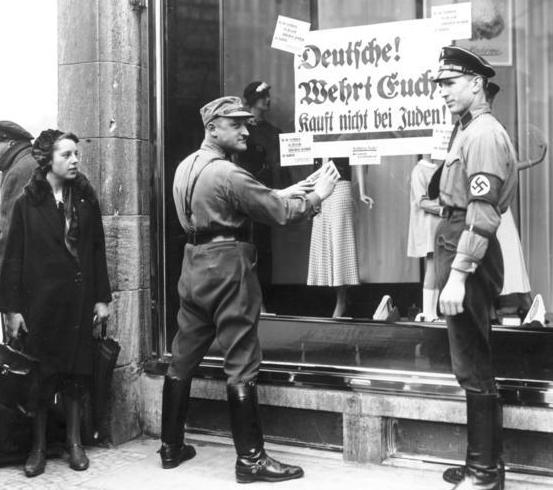
Ch6 Pt6 Saqqara, Apis, and the Step pyramid.

We could not idle at Memphis for very long. Five minutes to take snaps, said our guide. The circle of fellahin, which he had hitherto kept at a respectful distance by spitting out occasional venomous injunctions in Arabic, now closed about us. Packets of snapshots? Ten piastres each. Do you want this piece of old money? Very valuable. I will sell it to you for five piastres. Baksheesh, effendi?

“Yallah! Ana muskid, enta arif? Ana mafish feloos.” Fluent Arabic in their ears, no doubt, but the limit of our vocabulary in that language. The translation? – Buzz off. I’m a poor man, understand? I have no money.” It makes no difference to our fellahin friends. They press around us until we finally take refuge in the waiting taxis.

We were going to Saqqara, a mile or two distant. It was the “boneyard” of Memphis, our guide informed us, and it took a while for me to grasp the fact that he meant “cemetery”. Evidently the United States troops who had found their way to Cairo during the war had been giving our dragoman lessons in American English. Our heavily laden taxis shot off in a cloud of dust, quickly reached the desert, and began to climb a short, steep slope at the top of which was a crudely printed notice nailed to a pole read: “Step Pyramid”.

We pulled up outside a barrack-like hut, built seemingly without any previously formulated design, and now in the process of falling apart. Only the fortuitous juxtaposition of its beams and stones kept it upright. This unlikely residence had sheltered Mariette Pasha against the sandy winds of the desert and against the heat of the Egyptian sun. This illustrious Frenchman, in the middle of the nineteen century, had discovered many tombs in the neighbourhood, and had taken away much baksheesh at the end of his sojourn. Our guide gave as much emphasis to Mariette Pasha as he did to the ruins themselves. He was obviously proud of the fact that in those days the Egyptians gave baksheesh away instead of asking for it.

A great pyramid dominated Mariette Pasha’s house, (now, oh shameful degradation, a sort of canteen where one purchased ginger beer and lemon pop!) This was the “Step Pyramid”, the sides not having a regular slope like the newer edifices at Giza, but being built up step-fashion. It is built up in six steps, or stages, unequal in height. The total height is 204 feet, with the base measuring 411 feet by 358 feet. According to our guide this Step Pyramid dates from 3000 B.C. and is the oldest pyramid in Egypt. It is completely solid – not with passages running through it like the others – for the Egyptians had not yet perfected the art of pyramid building, and the burial chamber had been excavated under the monument. Unfortunately it had been declared dangerous, and visitors were forbidden to enter it.

We turned towards the desert, and followed our guide between the dunes of sand. Through the shimmering heat haze which rose from the yellow, burning desert, the Pyramids of Giza extended in the distance in a long, straight line. It was very hot. I was sweating freely. My rough khaki shirt became soaked with perspiration and I regretted not having put on shorts.        

Where were we going? Our guide had omitted to tell us. A few of our number gave way to importunate Arabs who were following us with little donkeys, and paid several piastres to straddle these animals. No sooner had they done so, however, than we came upon a huge underground tomb, from which the sand has been cleared away on one side, enabling a ramp to be driven downwards. These excavations were the work of our guide’s hero, Mariette Pasha, and led to the tomb of Ti, a builder and powerful statesman in the time of Rameses II.           

We entered the tomb, bending ourselves double in order to pass through a low passage, and came into the room where Ti had found his last resting place. The walls were covered with drawings and carvings of ancient Egyptian life. These were done in the standard manner, the head always being shown in profile, with no attempt made to give the illusion of perspective. In one panel, slaves – men and women – were working at their everyday tasks for their master Ti. On another, they were bringing offerings to him, to his wife and to his son. On the wall, a door had been represented – a false door – in order that Ti’s spirit might leave the chamber when it desired. And in a small neighbouring room the people who had buried Ti had placed a statuette of their lord for every day of the year, wherein his spirit could abide whenever it wanted. At the time of our visit, only one of these effigies was left, the others having been removed to museums.

Near Ti’s chamber were the chambers of his wife and son, whose walls – it was not possible to go inside them – were also covered with drawings representing work and sacrifices, and with rows of hieroglyphic writing. There was also the representation of a false door, allowing the spirit to leave and re-enter at will.

We ascended the cement slope leading to the open, and soon the dazzling sand was again under our feet. The dragoman strode along in front, his blue galabieh swelling like a wind-filled sail, and we followed him obediently.

Shortly we came upon another concrete path leading, like the entrance to the tomb of Ti, into the bowels of the earth. This was the tomb of the sacred bulls of Memphis, and at the bottom of the slope we waited for a while until our eyes accustomed themselves to the darkness, and an Arab, who acted as watchman, had lit several oil lamps. All these tombs had been electrically lit before the war, the guide explained. Even the pyramids were wired for it. However, war in the desert and the close proximity of Rommel’s troops had brought an end to it, and although peace had come, the current had not yet been restored.

Lifting our oil lamp above our heads, we see that we are in a great, high passage. In fact, with so little illumination, it is not possible to distinguish the roof. The ground beneath our feet is sandy, and we shuffle along in almost total silence. The walls of this tunnel are pitted at intervals with huge recesses, each one of which contains an immense granite sarcophagus. Each sarcophagus once held the mummified carcass of an Apis bull, which in a bygone age the inhabitants of Memphis had worshipped. A small golden statue of the dead animal into which its spirit could retire was also placed in the sarcophagus.

The sides of the sarcophagi were covered in hieroglyphics praising the fine qualities of the defunct sacred bulls, and there was also in each case a representation of a door so that the spirit could leave and re-enter at will. The ancient Egyptians worshipped only one bull at a time, its sarcophagus being prepared for it during the duration of its life, which lasted on an average, about twenty five years. If the bull died before its sarcophagus was appropriately inscribed, the inscription nevertheless ceased, and its coffin took its place unfinished with the others already in the tomb. Thus, the tunnel and its cavities were not constructed all at once, but piecemeal, as and when needed. It is calculated that the ancient Egyptians took five hundred years to dig this tomb out of the solid rock, lengthening it a little to accommodate each sacred bull as it died. One stands amazed at the enormous trouble taken to bury an animal. Yet even today human beings pay special allegiance to certain animals. One thinks of the American eagle, the British lion, the Russian bear, the Australian emu and kangaroo, and the goat – the mascot of a crack English Guards regiment and given the honorary rank of corporal. The more it changes, the more it is the same thing, and we are not really so far removed from the citizens of Memphis, those mysterious people who lived more than four millennia before Christ.

Then, of course, one asks oneself what link there is between this virile race and the tattered inhabitants of modern day Egypt. What part did our guide’s ancestors play in building these fantastic tombs? These questions can only be pure speculation. Some encyclopaedias show mummies and pictures suggesting a people with almost European features. We shall never really know.

At the end of the main tunnel there was a short opening big enough to admit a man’s body which robbers had made in their search for fresh booty. But they had been out of luck, for the tunnel ends here. It is a tunnel which, after five hundred years of toil, finishes nowhere. Like the rest of us, these people had been playing with pebbles on the beach while waiting for eternity.

We retrace our steps, and at the entrance our guide stopped us to explain one more point.  

“The slope which leads to the surface was constructed by Mariette Pasha,” he explains. “But this is not the real entrance. The original entrance to this tomb was a huge hole made up there, high above us in the roof, where the floor of the desert lies. So the questions is, how did the ancient Egyptians get those huge tremendously heavy granite coffins all the way down here to this underground catacomb? They did it by completely filling up this part of the tunnel with sand – right to the very top. They then manhandled the sarcophagus from the desert above on to the sand, which filled up the hole, after which they commenced to shovel the sand out. When the sarcophagus had at length descended to the tunnel floor, where we are standing, they put wooden rollers under it and pushed it away to its niche”.

We return to Mariette Pasha’s house, drink a bottle of fizzy lemonade, known in these parts as “gazoosa”, and pack ourselves once more into our taxis. Then the bouncing, dusty journey back to Cairo begins. On the way we pass Arab men and women working patiently by the sides of irrigation canals, which bring water to the desert. The trees which grow alongside these canals are heavy with red blossoms and give shade to the people who scratch a living from this sandy soil where fields of corn grew before the desert was unleashed, and where once the kings of ancient Egypt reigned.

Despite the squalor of the poor, benighted fellahin, pleasure predominates when I think back on my stay in Egypt. I had always wanted to travel abroad, and this was my first protracted stay in a foreign country. It was also the end of an era of British colonialism, which made it doubly interesting.

The day was coming when I should have to leave Egypt. Therefore I tried in the diary I kept at the time to pass things in review.  I recorded a general impression of the fabulous city of Cairo and the way things were with me – a young and impressionable fellow coming to the end of a protracted stint of enforced military service. 

I always liked Maadi, that pretty, mostly European settlement on the banks of the Nile, just outside Cairo. The streets of Maadi were planted with trees whose branches were laden with red, sweetly smelling blossoms. One day, when I return, I shall identify the species. Today, I can no longer remember clearly exactly how they looked. But Maadi always seemed to be bathed in sunlight. The people of Maadi were upper middle class, conscious of their intellectual and social superiority, and therefore had little to do with the rough soldiery to whom we belonged. For a few weeks I used to visit a school teacher called Phillippa……..and her other name escapes me…….who was also entertaining a captain from the “Signals” camp. Needless to say, we never visited Phil on the same night. There was nothing between us. Phil was merely being kind to an English soldier who was far away from home. She was approaching forty, unmarried, although not unattractive, and had adopted a daughter, who was away somewhere at college.

I was grateful to Phil for her kindness, but there was always a constraint between us. She had a certain arrogant self-assurance that I inwardly resented. It was possibly because, coming from the east end of London as I did, and being conditioned to the English class system, I suffered from a fairly large inferiority complex. I knew some French people in Maadi, before whom, pleasant as they were, I felt the same constraints.

The fellah and the effendi………

As I grew older I would develop my own secret intellectual arrogance for those who thought that they knew everything, although in reality they had never left school. And the real wisdom, of course, is the realisation that it all behoves any man to look down on another, for we are all mortal, and during our short stay on earth we all have something to contribute to the Common Weal.

Ch6 Pt5 Pyramids and Ramses 11.

It is curious how quickly time passes. During my four months on the outskirts of Cairo, I succeeded in visiting only two spots of real interest. The chief reason for this was, of course, the fact that more often than not I was broke. I drew only a pound a week. And that doesn’t take one very far in a place where things were as expensive for Europeans as we found them in Cairo. The other reason was “the exigencies of the service”. In the army overseas you cannot always leave camp when you want. Also, when the political situation is a bit dicey, you cannot always go where you want. Other places are always “out of bounds” to private soldiers, their rarefied atmosphere being reserved exclusively for commissioned officers.  

However, we decided one day to visit the Pyramids and travelled into Cairo. In Fouad Street, we waited for the necessary tram. An Arab tout came along and told us that the bridge over the Nile had fallen down and we would therefore do better to take a taxi, which he would procure for us. We chose to treat this statement as a slight exaggeration, and sure enough, in a few minutes our tram came swaying towards us. It was full to overflowing with Arabs clinging to its sides like obstinate flies. Somehow or other we managed to find ourselves places on the running board, and the vehicle set off again at a hair-raising pace, screeching and swaying to such an extent that I was really afraid that it would turn turtle. We crossed the wide expanse of the Nile, spanned by a magnificent modern bridge. When the city was illuminated at night, the breathtaking sweep of the river at this point reminded me of the curve of the Thames between Waterloo Bridge and Blackfriars, where I had visited so often as a boy. On the other side of the Nile we continued to the outskirts of Cairo, and changed trams. In this new transport, we succeeded in finding ourselves places on the wooden seats, and it was then a swaying, hilarious journey through the gimcrack, jerry-built outer suburbs. We careered down a hill at full tilt, roared underneath a huge modern cement bridge, then climbed a slope and flew straight as an arrow to the tram terminus. Here we got out, rather white-faced and with small globules of sweat pearling our foreheads.

On the left, Khufu’s Great Pyramid of Giza reared itself into the sky. We approached it by a curving road, passing a restaurant, which looked as if it was falling to pieces and from which a radio blared forth most inappropriately the latest American jive number to hit the record charts. Then we found ourselves at the foot of this fantastic Pyramid, of which each stone was at least half the height of a man. We abandoned our original intention of climbing the Pyramid – it would have been a considerable task, and would have had time for nothing else. Instead we clambered up a few stones and entered the interior. 

We followed a curving passage, scaled a narrow wooden staircase, and gazed with wonder at the immense slope constructed of huge blocks of stone by which the sarcophagus had been raised into the heart of the Pyramid. We came at last to the large, empty “King’s Chamber” where the mortal remains of King Khufu or Cheops had once rested. On the walls were typically Egyptian representations of the various activities of the king and hieroglyphic writing describing his activities and triumphs. We then descended to the somewhat smaller “Queen’s Chamber”. The heat was considerable inside the pyramid, and the enormous blocks of stone on all sides, much larger than those outside, took on a menacing aspect. Supposing it all collapsed? We should be squashed like mud crabs under the heel of a giant.

This Great Pyramid, the largest of all the pyramids was truly an amazing construction. The height of the pyramid was 481 feet, and the base covered an area of 13 acres. It is said that if it were possible to put St. Peter’s Church in Rome inside the Great Pyramid of Cheops, it would occupy only half the ground area. There is apparently a core of local stone within the Pyramid which it is not possible to see, but it has been estimated that the core of local stone and the original outer facing of limestone, (this latter facing now long since gone), were composed of 2,300,000 separate blocks weighing from 2½ to 15 tons each. In the face of such statistics, and having been inside this carefully built edifice which stands up to any test of modern engineering principles, the mind boggles. These tombs were built between approximately 2900 and 2750 B.C. The methods of construction must have been without the benefit of machinery such as we use today. The labour, toil, cruelty and heartbreak involved in building these monuments almost defy imagination.

From the “Queen’s Chamber” we followed a winding, sandy tunnel, and suddenly found ourselves standing in the open air, blinking in the sunlight. It was good to leave behind that tremendously impressive but claustrophobic interior. We jumped from stone to stone until we reached the flat desert sand. We circled the pyramid, marvelling at the fact that almost all of those more than two million stones, all of them large, some positively huge, had had to be cut and brought here from many miles away. A hundred thousand slaves, our guide had told us, had worked for twenty years to raise this edifice, this folly, this wonder of the world. Like a subliminal picture flashed on a screen, I saw in a split second my eight months of misery as a forced labourer in Germany, and compared that with the incredibly harsh life of a slave in Ancient Egypt working for twenty years in much harsher conditions to build this mausoleum for a Pharaoh’s corpse.

To our right another pyramid lifted itself against the blue, cloudless sky. Then it was a succession of pyramids, extending into the yellow, burning desert.

We followed the sandy path separating the two pyramids in our immediate vicinity. These huge monuments towering beside us were pitiful tokens of man’s endless search for some sort of immortality. Yet the suffering of the unwilling builders remains. Perhaps the pyramids are monuments not so much to those mighty Pharaohs of old, as to their workmen, without whose labour these wonders of the world would never have existed.

Eventually, on our left, in a sandy hollow, we sighted the Great Sphinx. The view of the back was disappointing – a mass of badly carved stone. And we saw as we came nearer that the paws had been restored with large and inappropriate bricks. But as we looked at the face of the Sphinx we understood why it had become famous.

For the blind eyes, the strong nose – strong despite the erosion of centuries and the vandalism of Napoleon’s troops nearly a hundred and fifty years before – and the thick lips, curved in an enigmatic, disdainful, merciless smile, expressed a supreme pride and an utter cruelty. The ghosts of a far-off race, at once civilised and savage, defied the passage of time, and still haunted the dry, yellow desert. One sensed a presence hostile to every being who came to profane these sacred places.

We gazed for the last time at the face of the Sphinx, then retraced our steps, reached the highway, and walked silently down to the tram stop. The coaches jerked into motion. Suddenly, the spell that had been cast over us was broken. Native vendors climbed in en route with baskets of oranges and peanuts. We sang boisterously, to the considerable amusement of our Egyptian fellow-passengers, who had no difficulty in understanding certain gestures and onomatopoeic sounds that accompanied our rather ribald repertoire. Even the child beggars, who climbed aboard, displaying their defects and amputations for baksheesh, could not dampen our spirits. Thus it was a gay, pitching, swaying journey into Cairo, illuminated now with neon signs, and very beautiful in the twilight.

A few days before my departure from Cairo, I decided, finding myself in the YMCA canteen in Soliman Pasha Street with two pounds in my pocket and time on my hands, to undertake an excursion. This was a tour to Memphis, capital of Ancient Egypt, and to Saqqara, which had once served the town as a cemetery. I allowed myself to be relieved of forty five precious piastres, and the following Sunday morning, when the tour was to take place, presented myself at the canteen.

When all the party was assembled, we were ushered through the back door into an alley, where we piled into waiting taxis. In ours there were eight people. Two passengers were squashed in the front seat with the driver. (This was a dirty, unshaven, cross-eyed man with a small circular woollen cap on his head). There were two more people on the folding seats behind him, and three others crushed into the bench seat at the back. However, nobody minded. We were looking forward to an interesting trip to Memphis and Saqqara. The director of the trip was a stout, smiling Arab, who spoke English extremely well, and always had a joke on his lips. He was the prototype, in fact, of a whole generation of post-war tourist guides whom we were to know when the world had recovered from the ravages of war, and we all entered better times. Our guide was dressed in a blue, excellently tailored galabieh, which set him aside from others. He went to considerable length to explain to us with obvious pride that this was the “national dress”. He was employed by the YMCA, and warned us not to give any tips – he would pay for everything. This was a real turn-up for the books, and we received the news with delight.

On leaving, we crossed the Nile, and passed the Zoological Gardens. Incidentally, the latter were so clean that one was driven to wonder whether the government cared more about the welfare of the caged animals than that of the beggars who swarmed the streets. We followed dusty tracks alongside sluggish canals, passed irrigation wheels whose design had not changed in five thousand years. We also made several stops for inspection by Egyptian police in white trousers and jackets, with white topees crowning their dark heads.                       

The track became more primitive. We lurched through dusty, dirty villages where Arab shops, devoid of windows, opened directly and blindly upon narrow streets. At every yard we were bounced and jostled as the car wheels slithered over potholes. In these villages, I thought, a European would not walk alone at night. 

We came to Memphis, which consisted of a few clumps of palm trees on the edge of the desert. Five thousand years ago, Memphis was the greatest city in Egypt, and the Pharaohs ruled from here. Now it is nothing, an insignificant village twenty miles up the River Nile from Cairo. As the taxis discharged their occupants, we were at once surrounded by Arabs, who either tried to sell us photographs or pieces of ancient “money” covered in verdegris and “guaranteed genuine.” Failing that, they simply held out their hands for baksheesh.

First we were shown an immense statue of the king Rameses II lying horizontally on the ground because the legs had been broken. After passing this enormous statue, carved from a single block of stone, our guide led us to a small alabaster sphinx, with the King’s head, the ceremonial false beard, and a lion’s body to represent the strength and power of the king. The sphinx had been discovered lying on its side in the Nile, where it must have remained for many years, even centuries, for the flowing waters had completely spoilt the side against which they had washed. A few goats were grazing on the poor, dry grass in the hollow around the impassive sphinx.

Then we were led to a few stones from which time had erased every inscription. They were all that was left of a great temple that had stood here centuries ago. All the other remains had been stolen by Arabs to build houses, for stones were scarce in this vicinity and had to be brought from several miles away.

The mighty king, Rameses II, back in Egypt after a military campaign to extend the boundaries of his empire, and on his way to Luxor, had had two statues made of himself, each one of which weighed eighty tons and stood upright four thousand odd years ago at the entrance to the temple. Thus spoke our Arab guide, standing legs astride, arms akimbo, his cane held lightly in a brown hand. The blue galabieh which enveloped his stout body moved in the wind, outlining his legs and belly. The tassle dangled from the red fez perched on his closely cropped head. But we listened entranced to his guttural voice speaking an obviously alien language, for he was recreating for us the time when people on this very spot, went about their business in an historic and famous city under the rule of a mighty king of civilised, barbaric Ancient Egypt. We stood on a spot where ghosts of the past were present.

The second statue of the king was lying beneath the protection of a roof of corrugated iron. The legs of this statue were also broken off, but it was the better example of the two. We clambered on to a small platform erected around it, the better to examine the carving. As on all these statues, everything had been simplified. There had been no attempt to show every muscle on the torso or the limbs. Yet the impression given was one of great strength, life and immediacy. The face was so carefully modelled that it seemed to have an almost photographic exactness. What tremendous labour to carve such a statue from a single block of stone. And what tremendous labour to move it down the Nile on rafts and then transfer it across land to Memphis.